Closing the Loop on Global Impact
Circularity
We have a 2030 goal to enhance lifecycle management, continue to recycle 100% of our e-waste, and engage our stakeholders
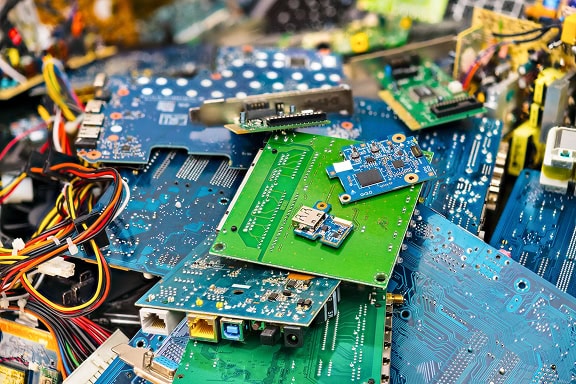
At Akamai, we do not view end-of-service hardware as waste; we view it as a critical phase in our operational lifecycle. In a global digital economy, the disposal of server infrastructure is a high-stakes process involving data security, material recovery, and environmental compliance.
Our circularity program transforms this potential liability into an asset. We have moved beyond simple recycling to a holistic total lifecycle management strategy.
The Cradle-to-Grave Chain of Custody
Our responsibility does not end when a server is unplugged. We enforce a rigorous chain of custody for every piece of hardware that exits our facilities.
- Security First: Circularity begins with data protection. Every drive is wiped or physically destroyed in compliance with NIST 800-88 media sanitization standards before it leaves our control. This ensures that our green efforts never compromise our security promise.
- Zero Landfill Approach: We maintain a strict policy for landfill waste. Through our partnership with e-Stewards–certified recyclers, we ensure that 100% of our electronic waste is processed through secure, auditable channels, preventing the illegal export of hazardous materials to developing nations.
Extending the Value Cycle
True circularity is not just about recycling; it is about extending utility.
- Internal Reuse: Our engineering teams use predictive analytics to identify hardware that can be repurposed for lower-intensity workloads or test environments, deferring the carbon and capital costs of manufacturing replacement units.
- Material Recovery: When hardware reaches the end-of-service stage, we prioritize the recovery of high-value materials — gold, copper, and rare earth elements — returning them to the global supply chain to reduce the upstream pressure for virgin mining.
By treating circularity as an operational discipline, Akamai protects the environment, secures our data, and recovers value from our physical assets.
Circularity Topics
E-Waste
At Akamai, we follow the Basel Action Network (BAN) electronics stewardship known as the e-Stewards Standard to support a unified global approach to the Basel…
Learn more about E-WasteWater
We recognize the importance of water management across our broader operational footprint, particularly regarding its role in supporting global technology infrastructure.
Learn more about WaterPlastics
At Akamai, we’re taking steps to reduce our reliance on plastic across our value chain.
Learn more about PlasticsCustomer Engagement
As the global regulatory environment mandates Scope 3 emissions disclosure, Akamai’s role shifts from a service provider to a critical risk-mitigation partner. We are uniquely…
Learn more about Customer EngagementCommunity Engagement
At Akamai, we recognize that businesses are responsible for working with their local communities and addressing the environmental impact of their operations.
Learn more about Community EngagementEvent Highlights
The Akamai sustainability team actively participates in global conferences to create awareness, share knowledge, and foster collaboration to help build a sustainable future for all….
Learn more about Event HighlightsSustainability Advocacy
Akamai’s sustainability advocacy program
Learn more about Sustainability Advocacy