Affirmation of Our 2030 Goals
Net-Zero Emissions
The digital economy is entering a new phase of energy intensity. As Akamai expands to support the demand for our new AI inferencing platform and distributed cloud computing, our physical footprint must expand to meet the moment.
We are navigating a dynamic challenge: Our business growth can sometimes outpace the rate at which the global grid can decarbonize.
Managing Emissions Growth
Our long-term goal is to decouple global business growth from our carbon footprint. We’ve observed that it is possible to experience a dynamic environment where the rate of global grid decarbonization and our own growth trajectory require strategic recalibration, so we are intensifying our focus on key drivers — like software-led efficiency and targeted renewable procurement — to realign our progress and ensure sustainable scaling.
The Business Translation
Our rapid business growth and evolving energy markets present a complex landscape where demand can temporarily outpace the rate of global grid decarbonization. Despite these headwinds, our strategic focus remains firmly on decoupling our revenue growth from our environmental footprint over the long term. This is the definition of operational leverage.
The Correction Plan: Closing the Gap
Our overarching objective remains achieving net-zero by 2030. To neutralize absolute emissions rise, we have activated a two-lever approach that prioritizes atmospheric impact over easy accounting wins.
Lever 1: The Efficiency Dividend (Supply Side)
We are aggressively lowering the energy baseline of our hardware.
- Software Optimization: By targeting efficiencies across our software, we continue to create capacity out of thin air, delaying the need for physical server deployments.
- Hardware Density: We are transitioning to next-gen servers, which deliver higher compute density per watt. This ensures that future growth consumes strictly less power per unit of value delivered.
Strategic Spotlight: Decarbonizing AI
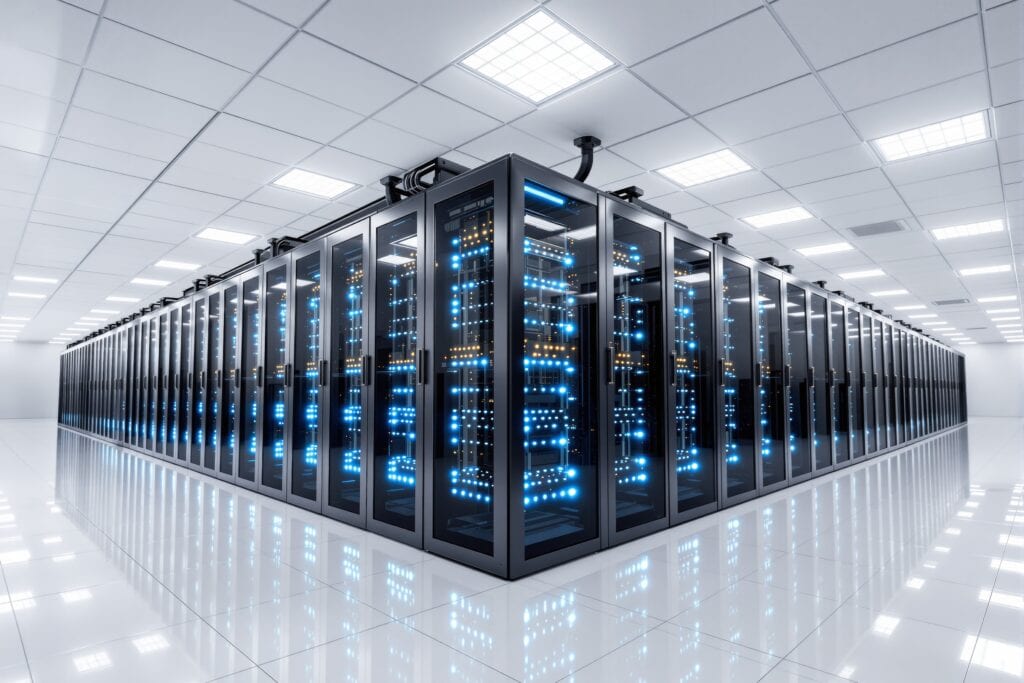
The intersection of AI and energy presents a complex, industry-wide challenge. The rapid integration of generative and agentic AI introduces new dynamics to sustainability objectives across the tech sector. Conventional architectures that route AI interactions primarily through centralized data centers are becoming increasingly resource-intensive. This approach requires significant energy for data transport and concentrates thermal demand on regional power grids.
Akamai recently deployed the structural fix: The Akamai Inference Cloud.
By leveraging our massively distributed edge platform, we have decentralized AI compute.
- The Architecture Shift: We bring the compute to the data, rather than hauling the data to the compute. This drastically reduces the energy tax of network transport.
- Optimized Hardware: Utilizing NVIDIA GPUs optimized for edge deployment, we execute inference tasks with superior performance-per-watt compared to general-purpose centralized clouds.
This is how we protect our 2030 goals: We are not stopping AI growth; we are moving it to the edge, where it is inherently more efficient.
Lever 2: High-Impact Procurement (Demand Side)
We are moving capital into the grids where our growth is happening.
- Targeted VPPAs: We are not relying on unbundled renewable energy certificates (RECs) to paper over the difference. We have accelerated the procurement of VPPAs in carbon-intensive grids in the areas where we need it the most.
- The Grid Mix Hedge: By funding new renewable capacity in specific regions, we ensure that our energy consumption is matched by new green electrons displacing dirtier forms of power, rather than simply claiming credit for existing hydro or solar in already-green regions.
Our Trajectory
The path to 2030 is rarely linear; it demands constant, strategic calibration. We view these evolving dynamics as an opportunity. We are actively architecting the next generation of AI inferencing by shifting away from brute-force centralization toward precision edge compute. By embedding sustainability into the very code of AI, we ensure that as intelligence scales, our carbon footprint does not. We will continue to build, optimizing every watt and every workload, until the curve bends permanently toward zero.