Water
Circularity
We recognize the importance of water management across our broader operational footprint, particularly regarding its role in supporting global technology infrastructure. Even in environments where direct management is decentralized, we remain mindful of our water-related impacts and look for ways to align with broader conservation principles. Our approach focuses on understanding our general relationship with this critical resource and supporting responsible water practices wherever feasible.

Because our global footprint spans diverse operational arrangements, navigating water data collection and implementing uniform efficiency measures naturally involves varying levels of complexity. Rather than letting these variables limit our perspective, we utilize available insights to better understand our general water risk exposure and focus our optimization efforts on areas where we can drive the most meaningful alignment.
Water Stress Assessment and Supplier Engagement
To assess our water-related risks, we employ the following approach:
- WRI Aqueduct Tool: We use the World Resources Institute (WRI) Aqueduct tool to monitor global water stress, particularly at network deployment locations. The tool helps us identify areas of high water stress and scarcity.
- Forward-Looking Climate Alignment (AR6): To anticipate long-term hydrological shifts, we augment our baseline WRI Aqueduct data with the latest climate projections from the IPCC’s Sixth Assessment Report (AR6). Integrating these advanced physical risk scenarios allows us to model future water scarcity trends and ensure our infrastructure planning remains resilient against evolving climate realities.
- Annual Supplier Assessments: We assess suppliers to gather data on cooling systems and water consumption at the site level, helping us to further understand local watershed risks.
- Adaptive Management: Based on the annual assessment results, we adapt our water management practices in our EMS to address identified risks. Sites and vendors with high water risk are prioritized for engagement and inclusion in our ISO 14001 audit process.
The data captured in both our annual supplier assessment and water stress analysis has allowed us to expand how we approach sustainability in data center procurement. Although Akamai does not have full operational control over many of our network and office locations, we remain dedicated to working with our suppliers to evaluate water risks, prioritize water stewardship, and implement effective water efficiency and conservation practices. We encourage data center and office partners to adopt advanced cooling technologies — such as air, liquid, and hybrid systems — that minimize water consumption.
Water Efficiency Programs
At sites where Akamai has operational control, we prioritize sustainability and have implemented water efficiency programs. Our headquarters in Cambridge, Massachusetts, features an integrated water management system, including rainwater harvesting, which significantly reduces withdrawal from municipal water supplies. Both of our AODCs utilize free air cooling, taking advantage of the cool local climates.
Akamai Water Incubation and Acceleration Programs
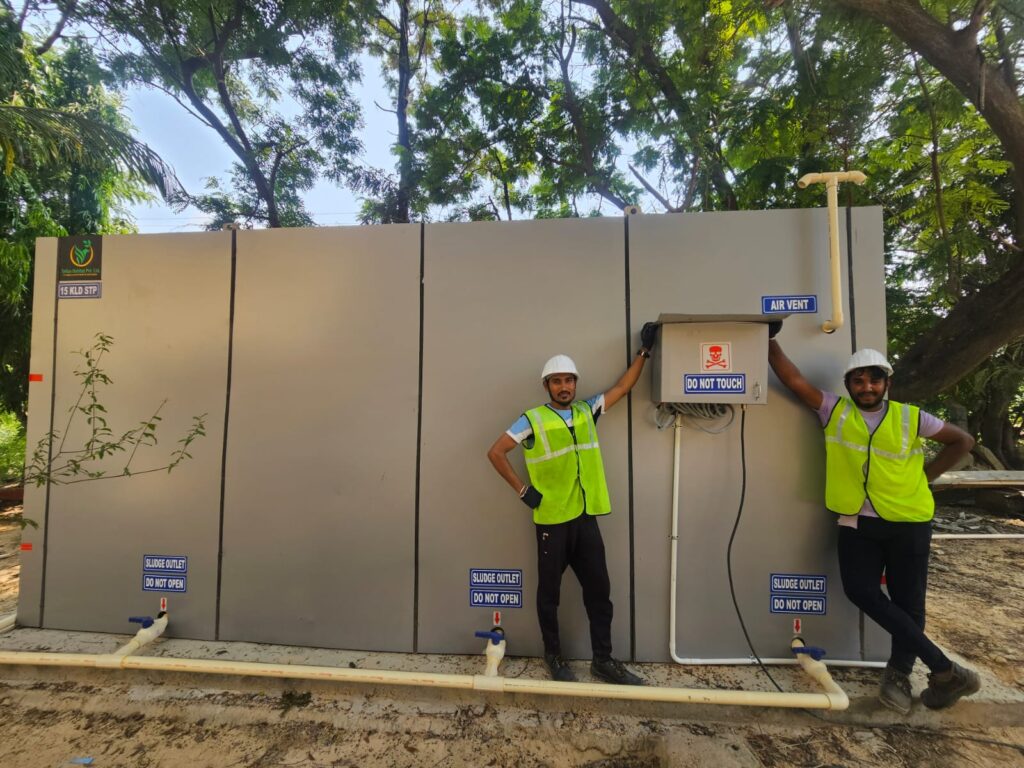
Akamai believes water conservation should be considered a necessity for today’s existence and a proactive effort for the future. In line with this conviction, Akamai India’s CSR Trust has taken proactive measures to address this critical challenge through their Water Incubation and Acceleration Programs in partnership with the International Centre for Clean Water (ICCW).
The Incubation Program supports early-stage startups with mentorship, funding, and access to networks so bold ideas can grow into impactful solutions. The Accelerator Program helps proven water-tech solutions scale faster and reach communities nationwide by offering technical expertise and strategic partnerships. Since the first program launched in 2020, Akamai has supported 26 novel technologies.
We aspire to minimize our water footprint, safeguarding local water resources, and positively impacting the communities where we operate. We strive to avoid locations facing water scarcity to prevent exacerbating existing challenges. In areas with reliable water sources, we work to minimize our impact on local supplies and promote water conservation. We will continue to manage water-related impacts and risks through our EMS, evolving our practices for water data collection and supply chain water stewardship. To learn more about Akamai’s approach to water stewardship, check out our Water Stewardship Policy.